

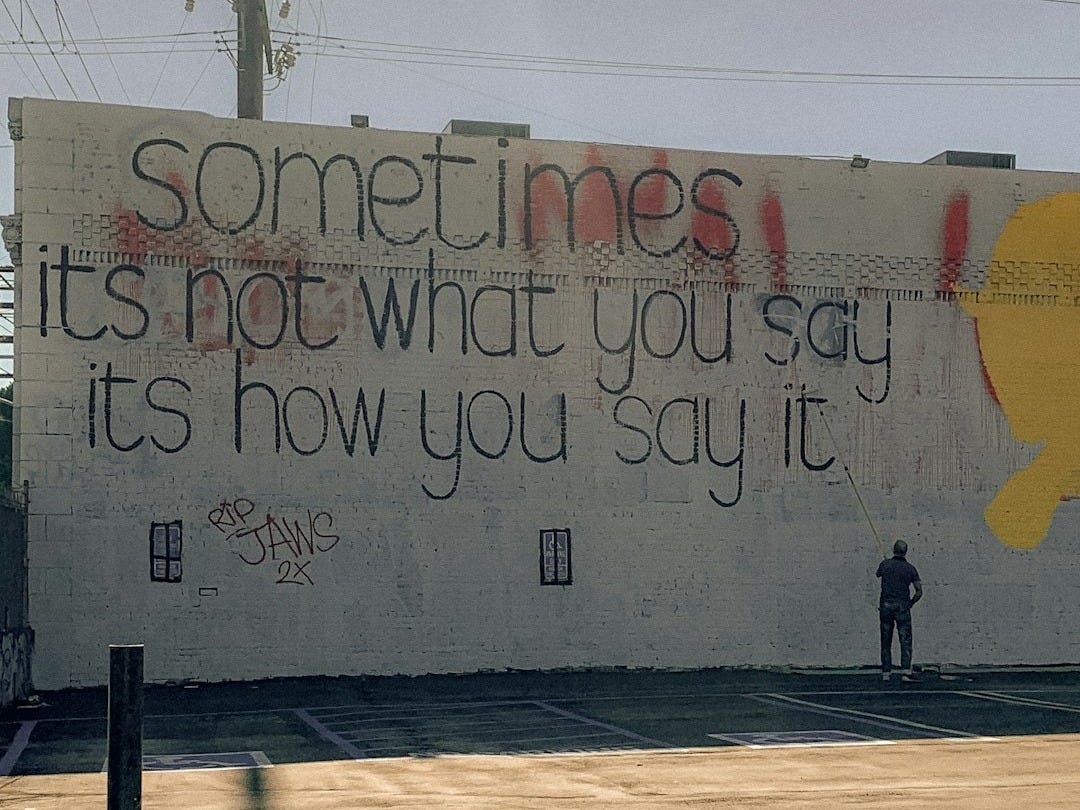
“Why don’t they get it?! I made it crystal clear!”
The irony of communication is that meaning in conversation is just as dependant on the hearer, as it is on the speaker. When what we think has been a clear instruction or piece of feedback turns out to have been ignored or misunderstood, we often default to questioning the other person’s intelligence. An emotionally and culturally intelligent person pauses judgement and asks the question, “how did they understand what I said?”
While it is true that some people just don’t understand, are selective in what instructions or points they pay attention to, and others may lack intelligence. However, I find relationships tend to be a lot less difficult when I assume good will and start with recognising that what I meant and what has been understood are two different things. This is true even when working with someone from a similar cultural background; when cultural and language difference is involved, the issues are amplified.
In the last two posts I introduced CQ (Cultural Intelligence), and the four capabilities of CQ - Drive, Knowledge, Strategy, and Action. This and the next posts will fall within the knowledge, strategy, and action aspects of CQ. Drive is all about your curiosity and how energised you are in working with and learning about different cultures - similar to whether you are introverted or extroverted. “Knowledge” is recognising differences and similarities between cultures, “Strategy” is about understanding their impact and planning accordingly as well as reflecting after interactions that cross cultures, and “Action” is the ability to interact in the moment - adapting behaviour and language accordingly.
An often cited theory by Albert Mehrabian states communication is 55% body language, 38% tone, and 7% words. This theory has been rightly critiqued, particularly that the percentage shifts between contexts as well as between languages and cultures. However, the idea that body language and tone change what is being communicated is correct, the issue is that different cultures will read said tone and body movement differently!
Other forms of communication, such as feedback or conflict, are also impacted, or made more complicated by culture. One person’s honest feedback is deemed insulting and dishonouring or another person’s “praise-sandwich” to ease the delivery of criticism is seen as dishonest and fluffy.
Where we need to be careful moving forward is that while some cultures tend towards certain forms of communication, individuals from or within a culture have their own personality. This means that we cannot assume that just because we know a person’s cultural background, we will immediately know how they communicate. Working with people just isn’t that simple and as already stated, CQ starts with curiosity.
We need to be asking questions to learn what is being expected of us. We also need to develop our self-awareness so that we can communicate our own expectations and the reasons for doing things in certain ways.
All this to say, communication becomes far more interesting when navigating cultural difference. So where do we start?
Communication is a broad term and it will need more than one post to get into the different aspects of it. Erin Meyer, in her book Culture Map, recognises 8 cultural domains that impact interactions. I’d suggest that while she has a domain that is “communication”, 5 of the 8 domains can fall under the label of communication. Culture impacts our feedback, the way we trust, how we persuade, how we make decisions, and how we navigate conflict. While I won’t create a post for each of these areas (you can read Erin’s book!), I do think it is important to recognise how much we assume when we think we’ve been communicating clearly!
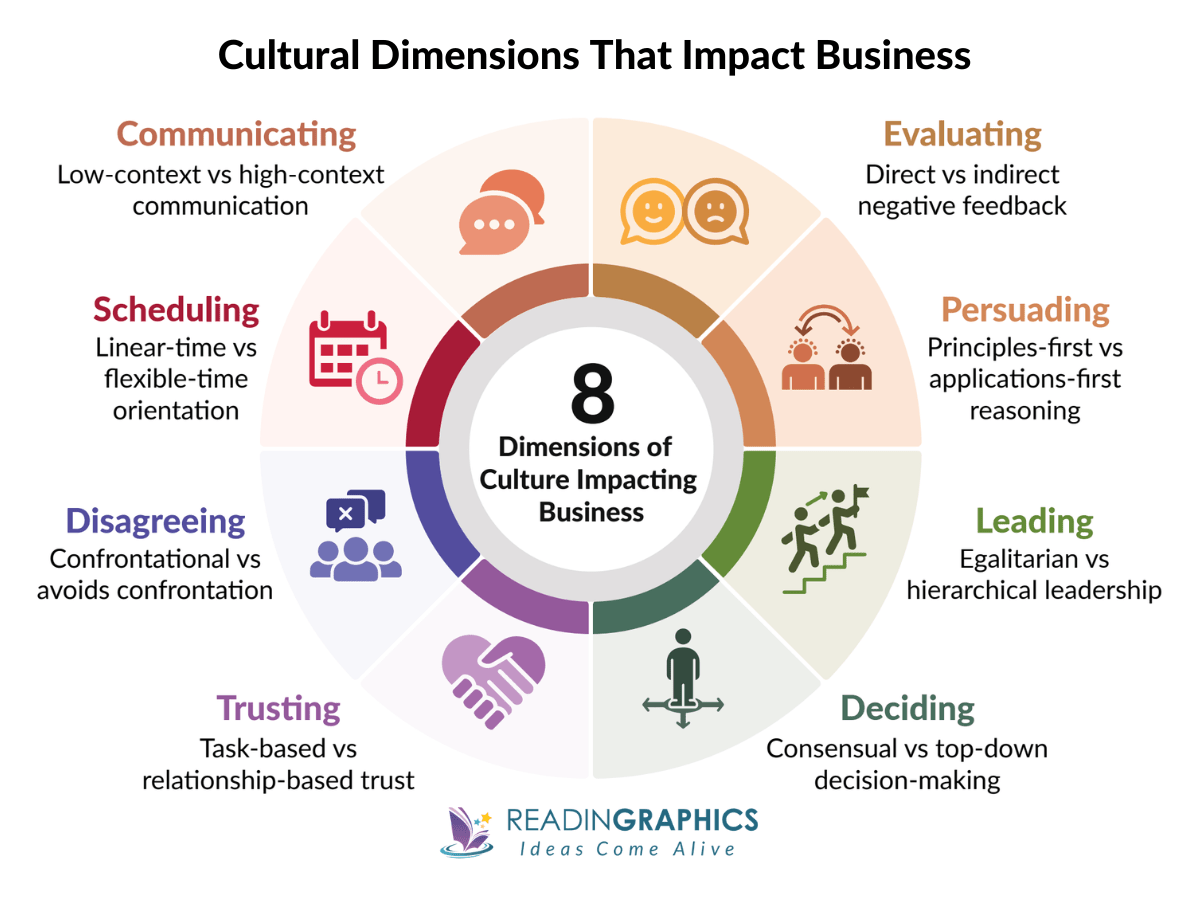
The remainder of this post will be to explore what Erin Meyer calls the “communication domain”. Communicating is broken down to what is known as low-context and high-context.
Low-context cultures emphasise the meaning of words said and put less weight on setting, tone and body language though the latter two still play a part. If you have ever heard the phrase “mean what you say, say what you mean” as an idea of integrity or expectation for communicating, then you are hearing an idea that is culturally flat. It is assuming a low-context culture where all emphasis is put on the words being said. In low-context cultures, If it hasn’t been said, it isn’t important - little can be left to assumptions.
High-context on the other hand is where situation, social status, tone, and body language are vital for understanding. Even what hasn’t been said has meaning. High context cultures tend to prioritise relationship building and trust over information sharing and task completion. This isn’t to say information or task is less important in a high context culture, simply the latter two cannot be done well without the relationship and trust being prioritised.
This has obvious implications for navigating cross-cultural situations. As Country Navigator puts it, “To someone from a high context culture, low context communicators can seem impersonal, distant or untrustworthy. Vice versa, high context communicators could be seen as intrusive or even impolite.”
Where do you locate yourself culturally when it comes to high or low context?1
What is more important - the meaning of words or the context in which you heard them?
Do you find silence in a conversation awkward or meaningful?
Do you prioritise getting straight to business or getting know your team mates more before the task gets done?
Do you take someone literally when someone they say “I’m fine” or do you listen for tone and body language ?
This is obviously not a detailed survey but if you leant towards the second option in every question (or most of them) then you are leaning towards High Context, vice versa for the first option.
You can take a more detailed quiz to find your context here: https://studies.labinthewild.org/highlow/
Recognising that some people prioritise relationship over task and are not always going to “say what they mean” - at least not as explicitly as you might be used to helps to move us from culturally ignorant to culturally aware. It helps us move to asking questions rather than labelling something as wrong. It may not remove the challenge of navigating misunderstanding, but avoiding a moral judgement helps us engage with the challenge rather than being offended or creating further difficulty down the road.
Have you had experience of interactions between contexts?
What issues arose and how did you handle them? I’d love to hear your experience and thoughts.
In following posts I’ll be exploring how High and Low context can impact other areas of communication. Subscribe to get these posts in your inbox.
If you currently work in a cross-cultural environment and would like to explore how coaching may be of benefit to you in improving cultural intelligence then please get in touch.
As stated already, there is an overlap between culture and personal preference as well as CQ and EQ. Your preference doesn’t always match up to a cultural trend - and thats OK!