

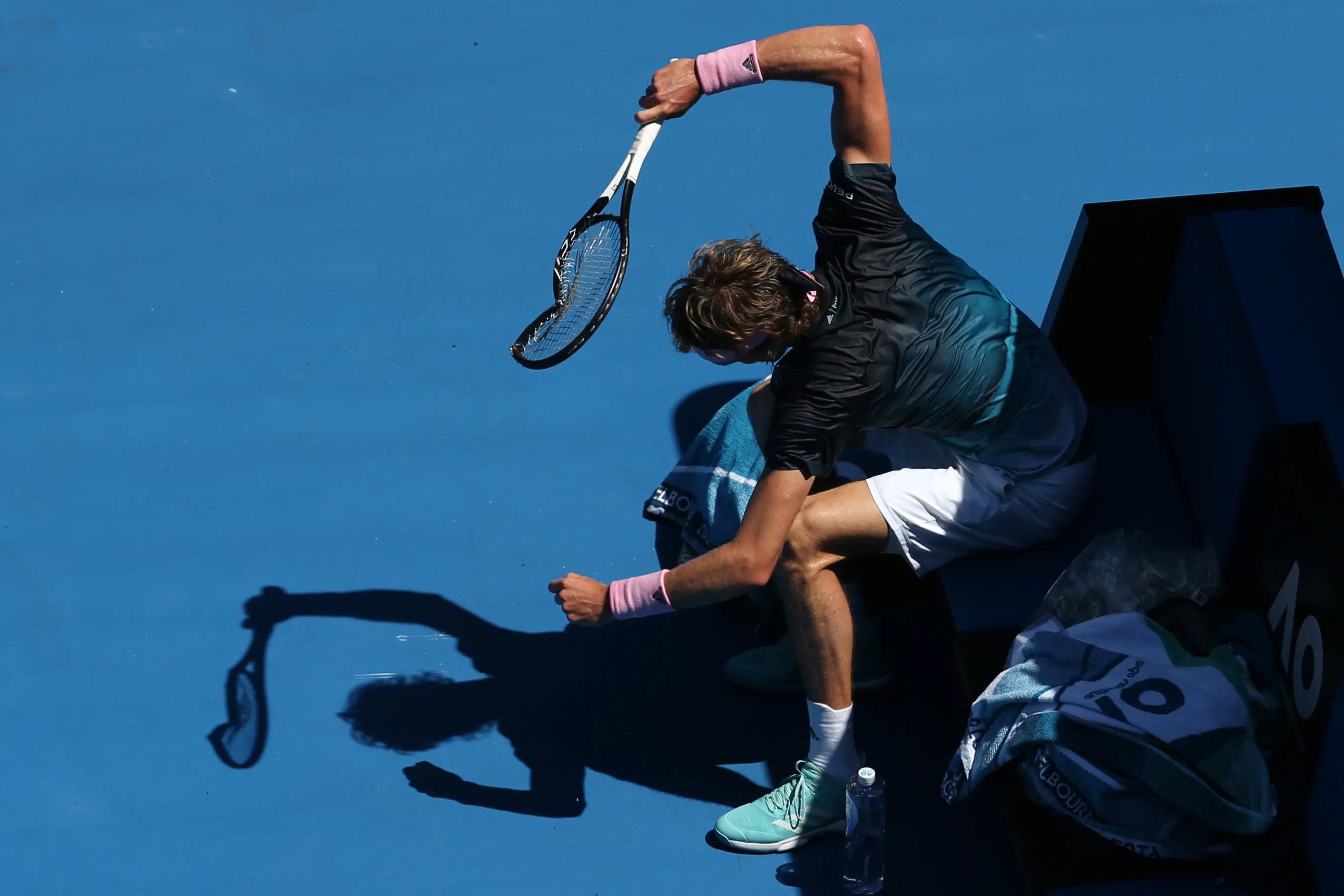
How do you talk to yourself? I’m aware some people don’t have an inner voice but for those of us that do, sport tends to bring it out of us. What do you say to yourself when you don’t play or act in the way you think you’re able to?
“You cannot be serious!”
Tim Gallwey wrote a seminal book on coaching that I’ve never heard of until I started this coaching apprenticeship. There are several books now taking the ideas of the initial book, The Inner Game of Tennis, into work, music, golf and others, but the first few pages of the original have been thought provoking enough to discuss immediately. While it does have quite a bit about tennis, it was worth the read as there is quite a bit that applies to life more generally.
One of the things I’ve recognised in myself but think it true of others is that we humans are very quick to give advice but very bad at taking it. This will be a theme of more blog posts but for now we can see how this plays out through self talk. If, as Tim Gallwey suggests, we think of ourselves as two selves - the one who talks (self 1) and the one who does (self 2) - self 1 can often be patronising and overly quick to advise. In sport, this causes self 2 to make more mistakes.
The inner critic can be well intentioned, not just a tantrum thrower - advising you to “just do a small tweak”, “focus on the ball”, “don’t try so hard”, or “breathe”. How helpful are those comments when someone else says them? Why do we accept it from our self?
An important value of coaching is believing that the person being coached has agency to make their own decisions and solve their own problems. The role of the coach is to listen, reflect back, challenge, be curious to ask questions without judgement, and give space, rather than to lead or advise. Can we apply this belief to ourselves?
What if your self 1 believed that self 2 is capable to do what it has been practising/training/learning to do? How would it look if your self 1 gave space for reflecting on self 2’s performance in a non-judgemental but curious way? We perform best when we are not overthinking, overly critical, or moralising mistakes or errors1.
I think sport is one of the best ways to recognise the character and values of “self 1”. Are you quick to correct, advise, and judge your mistakes? If you aren’t a sporty person, reflect on the last time you made a mistake - be it at work, in a relationship, or doing every day things like accidentally breaking a glass - what did your self 1 say to self 2?
Going through the weekend, can you objectively analyse your self 1? Try not to moralise or advise. Instead, can you turn the advice or critique into a question or simply a moment to pause, breathe, and allow self 2 to self-correct. More often than not, self 2 already knows the mistake was made and doesn’t need self 1 to get involved but rather just needs space and encouragement to get it right next time.
This is not to say mistakes never have a moral element - I emphasise the need to take responsibility for our actions - but if we fixate on the “wrongness” or “rightness” of an action, we can often spiral into shame or guilt, become overly defensive, or stifle the learning that comes from the error.
I really liked this reflections and ‘my self 2’ is giving side eye to ‘my self 1’ to start practising patience and give space to “self-correct” or simply be content with the way things happen.
Quite often we don’t give to ourselves the kindness we show others. And I’m definitely overly quick to advice myself - maybe others too so I’ll be more conscious about it now.