


One of the more significant moments in my life was a major issue within a leadership team I was part of. It was a moment that I’ve reflected on (some might say ruminated) and tried to squeeze as much learning from as possible. I learnt through this time that I tend to take on board the discussion and process it beyond the meeting - I find I remember people’s exact words and phrases, and at this particular time sent in a reasoned response with other options after meetings. I’m certain my fellow leaders didn’t operate in the same way and expected conclusions made in meetings to remain concluded.
I believe having space for input after important decisions are discussed is an excellent team strategy, not just because it helps people like me, but because it also allows for a diversity of thought. We don’t often reflect on the the way in which we make decisions, much of it feels like personal preference or intuition, but whether we realise it or not, our decision making is influenced by the culture we find ourselves in.
Over the last few months I’ve been digging deeper into Cultural Intelligence and the different frameworks and paradigms for understanding and engaging with cultural difference. I’m currently working through some of Erin Meyer’s dimensions which have been developed for businesses and teams to work more effectively with diverse cultural backgrounds.
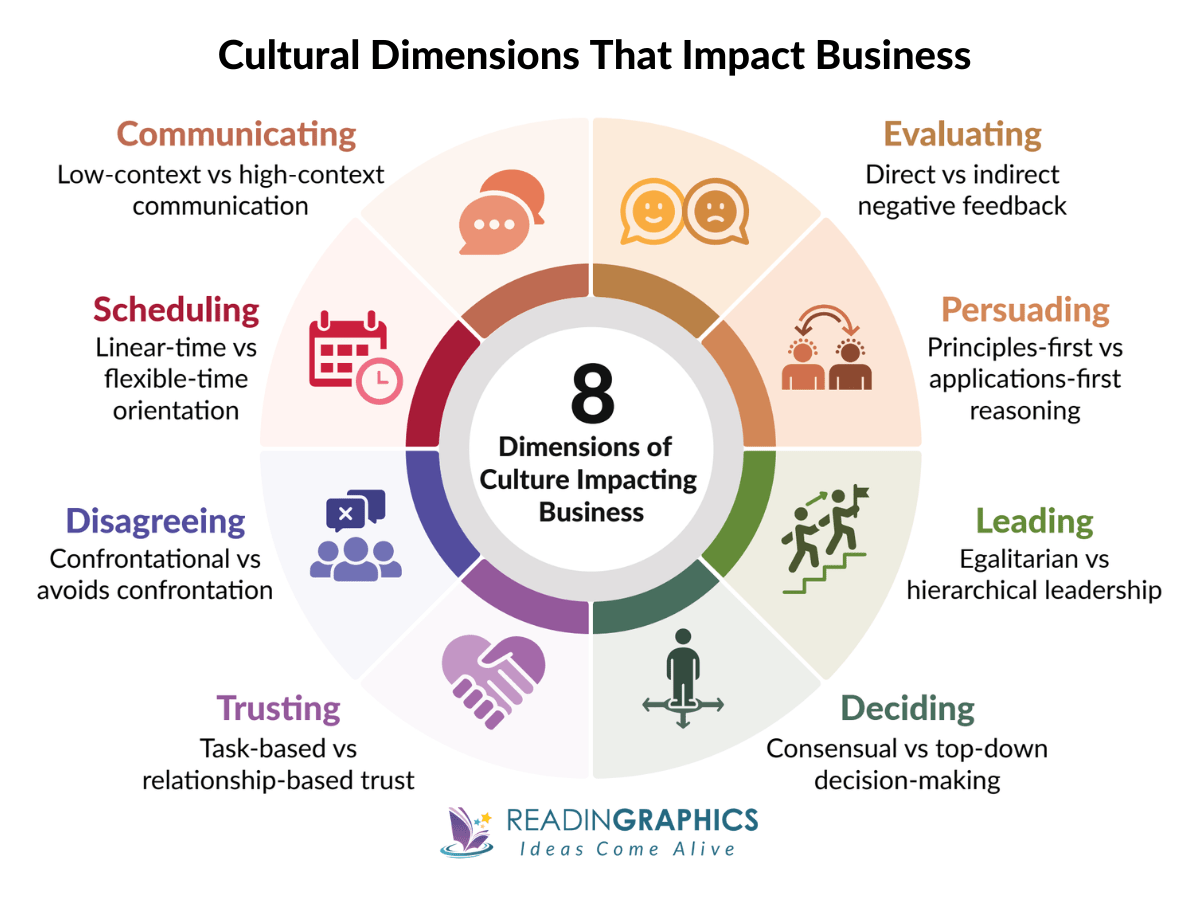
How a culture recognises leadership is often interlinked with how a culture decides - but not always! As Erin discusses in her book, America tends towards an egalitarian model of leadership with open-door policies and first name basis, but often operate with top-down decision making. The boss makes the decision and everyone gets on with carrying it out. Germany on the other hand is often more hierarchical in leadership structure, formal titles between boss and subordinate, and yet often decisions are made in a more consensus-building manner. These two countries, and a handful of others, seem to be exceptions to a general rule that hierarchical leadership tends towards top-down decision making, and egalitarian leadership tends towards consensus.
It is important to remember that this is a discussion of trends within country cultures and not a blanket rule. The difficulty with working across culture is that culture has various levels and an organisational culture may differ from a national culture, especially when an organisation operates internationally or has a culturally diverse leadership.
Recognising a cultural trend however can help us start to recognise influences on our own personal preferences. Where do you find yourself on the scale below? Is it similar or different from your national culture? If you aren’t sure, try a short cultural profile tool hosted by Harvard Business Review: click me

Erin Meyer’s work has made recognising and working with cultural difference accessible in her book, The Culture Map, but the danger of its accessibility is that it doesn’t explore other factors affecting decisions beyond highlighting a general trend between leadership style and decision making.
Geert Hofstede, whose research and cultural dimensions Erin has clearly built on, was a dutch psychologist who pioneered cultural research. His six dimensions of Individualism, Power Distance, Masculinity, Uncertainty Avoidance, Long Term Orientation, and Indulgence are all relevant to the decision making process. This is explored in further detail by Amala Ayyar on the UCL student blog if you are interested to dig in a bit more.
A very brief summary is that where you sit in each dimension impacts how you make a decision. It will also impact how you respond to others making a decision:
Do you expect to defer to a boss or elder?
Do you expect to be able to influence decisions in an organisation, even in a lower level role?
Do you expect decisions to be made with long term impact being considered, do you accept or avoid risk?
Recognising how you make decisions and the various influences from the culture[s] you’ve been raised in is just the beginning. You now have knowledge. The next part is deciding how to plan and act in ways that recognise that others will approach decisions differently from you.
Some initial strategies are shared by Erin Meyer in her book and on her blog:
If you find yourself working with a team more familiar with consensual decision-making, try applying the following strategies:
1) Expect the decision-making process to take longer and involve more meetings and correspondence
2) Be patient, even when opinions diverge
3) Check in with your counterparts regularly to show your commitment
4) Cultivate informal contacts within the team to monitor the progress of decision-making
5) Resist the temptation to push for a quick decisionOn the other hand, if you are working with a group of people who favour a more individualist approach to decision-making, these techniques might be useful:
1) Expect decisions to be made by one person (often the boss) with less discussion
2) Be ready to follow a decision that does not include your input
3) If you are in charge, solicit input but strive to make decisions quickly
4) When the group is divided, suggest a vote
5) Remain flexible, decisions are rarely set in stone
Patience, humility, and curiosity are the foundational skills of Cultural Intelligence. If you are new to a team or organisation, take time to ask questions, don’t judge processes as right or wrong, and be open to doing things differently - you might be surprised at how effective they end up being.
If you currently work in a cross-cultural environment and would like to explore how coaching may be of benefit to you in improving cultural intelligence then please get in touch.